

In today’s ever-evolving digital landscape, artificial intelligence (AI) is no longer just a fad. It has integrated itself into every facet of our daily lives, from the apps we use to the devices we rely on. For parents, this increasing presence of AI has both opportunities and very real challenges, especially when it comes to keeping children safe online.
As a former RAF Policeman and a passionate advocate for digital safety, I have on far too many occasions seen firsthand the dangers lurking in the dark corners of the internet. That’s why, in my opinion, parents must stay informed and be proactive in safeguarding their children against the risks associated with AI. In this guide, I will help you to explore the impact of AI on children, common risks they face, and also give you a few practical solutions to help you navigate this complex digital landscape.
Understanding AI and Its Impact on Teens
What is AI?
Artificial intelligence (AI) is technology that enables computers and machines to simulate human learning, comprehension, problem solving, decision making, creativity and autonomy. This can include everything from voice recognition in virtual assistants like Siri and Alexa to personalised recommendations on streaming services and social media platforms.
Statistics show that over 60% of teens use AI-driven applications daily, whether it’s through social media algorithms, educational tools, or gaming platforms. I think you can all agree that means understanding AI is more important than ever for you as parents.
The Double-Edged Sword of AI
AI is something that I have learned to embrace in my daily life, both personally and in the workplace. I think it is something that will also offer numerous benefits to enhance teens’ experiences:
Educational tools: AI can help customise learning experiences, making education more engaging and effective.
Personalised experiences: From tailored movie suggestions to adaptive learning platforms, AI can make technology more user-friendly.
However, always remember that along with these benefits come significant risks, including:
Privacy concerns: AI systems often collect vast amounts of personal data, raising questions about how that data is used and who has access to it.
Misinformation: AI-generated content can spread false information, leading teens to form opinions based on inaccurate data.
⚡Please don’t forget to react & restack if you appreciate my work. More engagement means more people might see it. ⚡

Common Risks Faced by Teens with AI
Privacy and Data Security
One of the biggest concerns with AI is how it collects and uses personal data. Teens may not know that their online activities are being tracked, analysed, and stored; this data then has the potential to be involved in data breaches.
Exposure to Inappropriate Content
AI algorithms are designed to curate content based on user behaviour. However, algorithms can often fail, leading teens and children of all ages to be exposed to inappropriate or harmful content. For instance, a teen could start watching videos on a harmless topic, only to be directed to explicit or violent content due to algorithmic misfires.
Cyberbullying and Online Harassment
AI has also played a role in enabling cyberbullying. Automated bots can amplify harassment, while AI-generated content can spread harmful rumours or misinformation. Statistics have shown that 1 in 3 teens has experienced cyberbullying.
Understanding AI-Driven Influences
AI can significantly influence a teen’s opinions, self-image, and even their behaviour. Social media algorithms, for example, can create echo chambers that reinforce negative self-perceptions or unhealthy comparisons and quite often this is exactly what happens and why I am not a huge user of them. Teens exposed to this type of content may develop warped views of reality, affecting their mental health and also their self-esteem.

Practical Solutions for Parents
Open & Honest Communication
It wouldn’t be a parent’s guide from me without this one. Creating an open & honest dialogue about AI and online safety is a priority. Here are some strategies for discussing these topics:
Ask open-ended questions: Encourage your teen to share their experiences of using AI-driven apps and platforms.
Normalise discussions about online safety: Make it a regular part of your conversations, rather than a one-time talk.
Implementing Safety Measures
As a parent, you can take proactive steps to protect your teen online:
Set up parental controls: Use built-in features on devices and apps to restrict access to inappropriate content.
Monitor online activity: Regularly check your teen’s device usage and discuss their online interactions with them.
Educating Teens on Digital Literacy
Teaching your teen how to use critical thinking regarding information. Here are some resources to consider:
Digital literacy programs: Enrol your teen on courses that teach them how to discern credible sources from unreliable ones.
Fact-checking websites: Introduce them to tools like Snopes or FactCheck.org to verify information.
Encouraging Responsible AI Use
Setting Boundaries and Guidelines
Establishing a family media plan can help create a healthy digital environment. Here are some suggestions:
Create screen time limits: Set specific hours for device usage to encourage balance.
Designate tech-free zones: Areas like the dining room or bedrooms can be tech-free zones to encourage family connection.
Role of Positive Reinforcement
Encouraging responsible online behaviour can be achieved through positive reinforcement:
Celebrate good behaviour: Praise your teen for making wise choices online.
Reward systems: Consider implementing a reward system for responsible tech use, such as extra screen time for completing chores or homework.
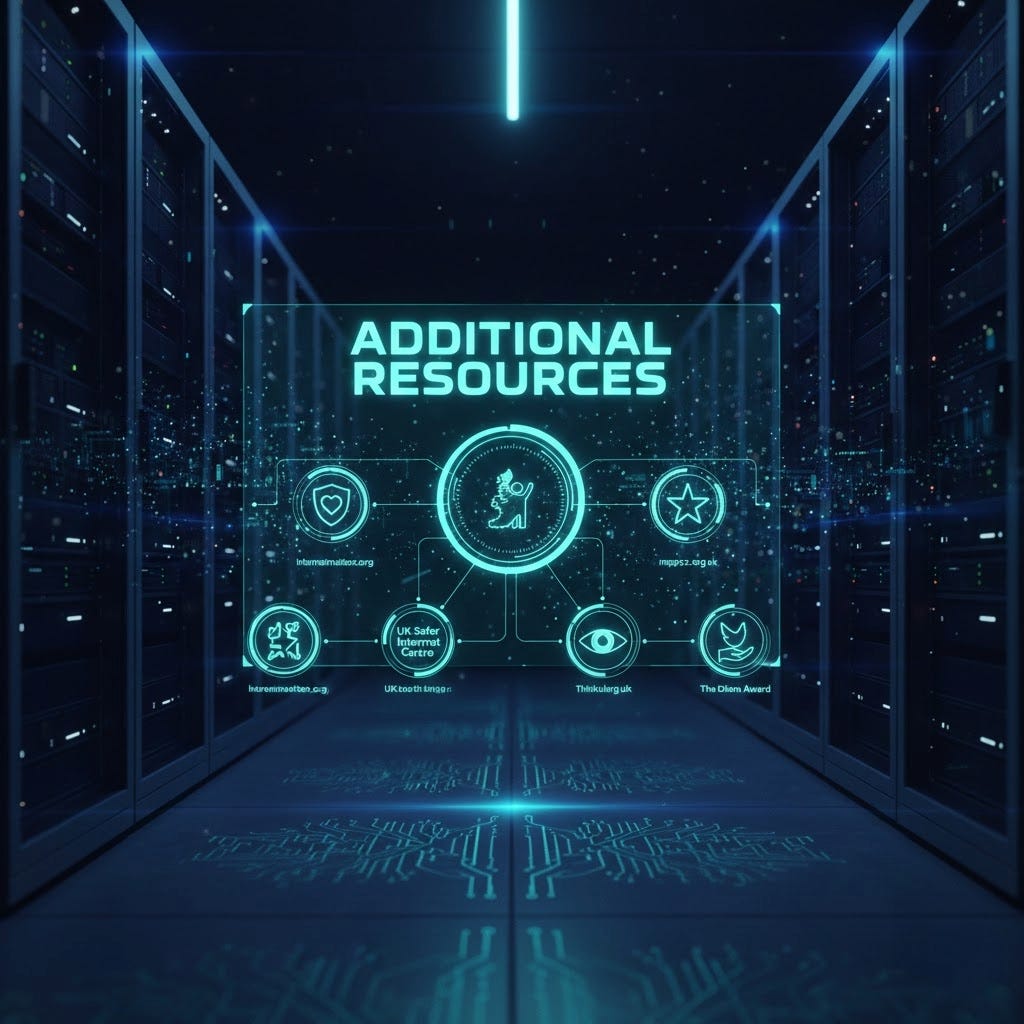
Additional Resources
For further reading on AI and teen safety, check out these trusted UK websites and organisations:
Internet Matters – https://www.internetmatters.org
Provides comprehensive guides for parents on apps, games, and devices, including a dedicated section on AI and teen safety.
UK Safer Internet Centre – https://saferinternet.org.uk
The central hub for online safety in the UK. They provide advice on cyberbullying, social media risks, and specific resources for parents and carers.
NSPCC - Keeping Children Safe Online – https://www.nspcc.org.uk/keeping-children-safe/online-safety/
The leading UK child protection charity. They offer expert advice on talking to children about AI, managing online bullying, and setting up parental controls.
Childnet International – https://www.childnet.com
A non-profit organisation that works with young people and parents to make the internet a safe place. They have excellent resources on identifying “fake” AI-generated content and staying safe on social media.
Thinkuknow (NCA-CEOP) – https://www.thinkuknow.co.uk
Run by the National Crime Agency’s Child Exploitation and Online Protection Command (CEOP), this is the official UK site for reporting online abuse and learning about digital risks.
The Diana Award (Anti-Bullying Pro) – https://www.antibullyingpro.com
The UK’s primary resource for tackling cyberbullying. They offer peer-led support and practical advice for parents on how to handle digital harassment.
As always, thank you for your support. Please share this across your social media, and if you do have any comments, questions, or concerns, then feel free to reach out to me here or on BlueSky, as I am always happy to spend some time helping to protect children online.
Remember that becoming a paid subscriber means supporting a charity that is very close to my heart and doing amazing things for people. Childline, I will donate all subscriptions collected every six months, as I don’t do any of this for financial gain.
