

This one was inspired by a message from another parent who follows my blog, who also happens to be someone I spent 4 cold and windy months down the Falklands with (Good times).
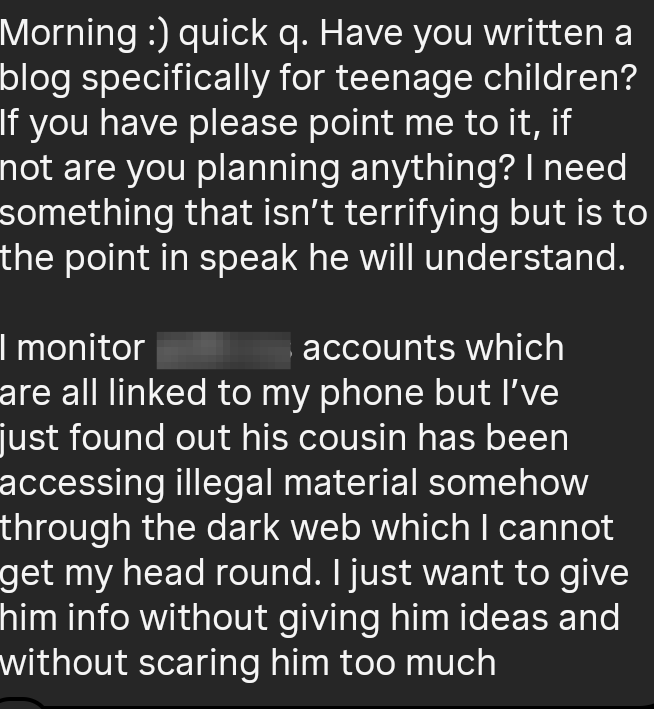
For the first part of the question, I sent her a link to my available presentations. The second part of the question, however, I felt needed a blog post for her and for you, the wider group.
The dark web. Even the name sounds like something from a thriller novel.
But here’s the thing. I spent years knowing what happens in the darkest corners of the internet. I’ve seen what gets traded there, what gets shared there, and who ends up there. And in my experience, most parents picture the dark web as something distant, something their kids would never stumble across.
I’m going to gently challenge that assumption today.
What actually is the dark web?
Let me break it down in plain English, because the terminology often gets in the way.
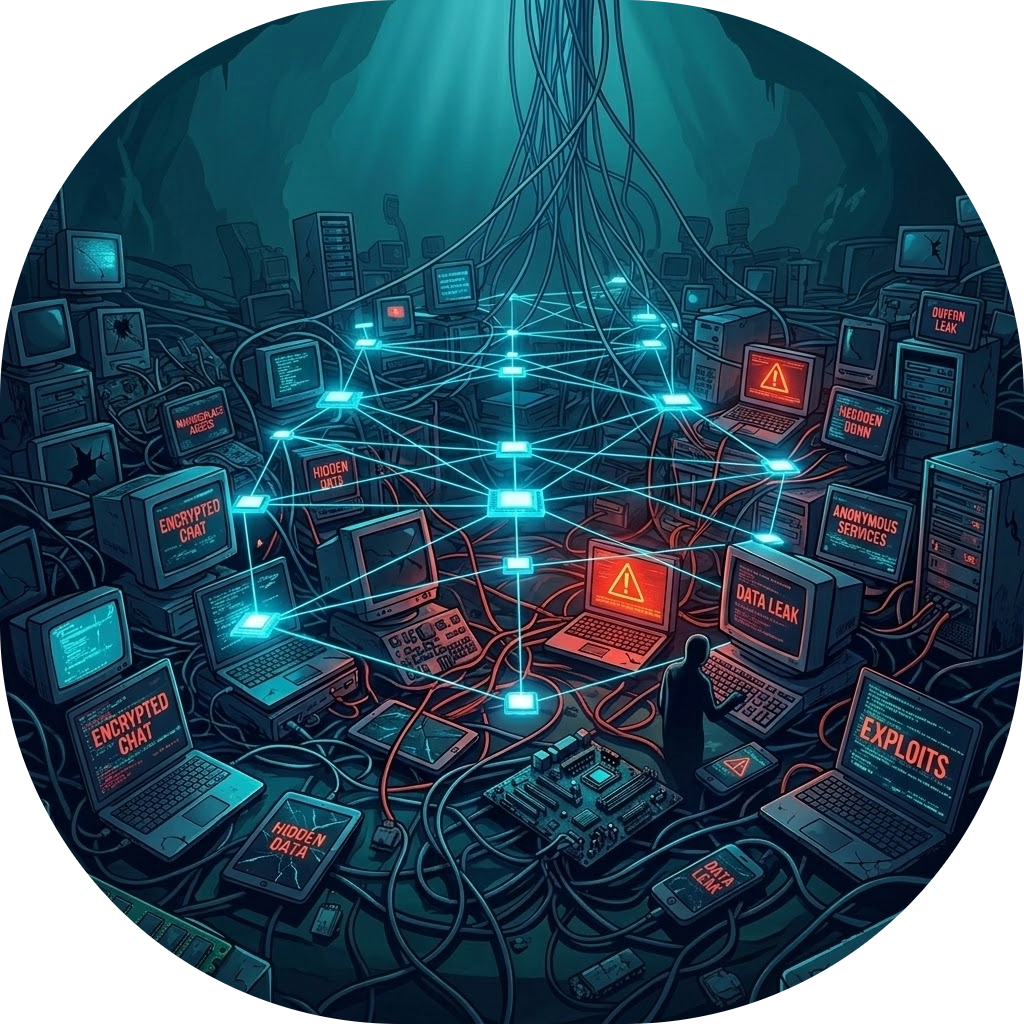
The internet has three layers. The first is the surface web, the part you use every day. Google, news sites, social media. The second is the deep web, things that aren’t indexed by search engines, like your bank account, medical records, or private email. That’s actually fine, and most of us use it daily without thinking about it.
The third layer is the dark web. This is a part of the internet you can’t access with a standard browser. You need special software, specifically something called Tor (The Onion Router). Tor works by bouncing your internet traffic through multiple servers around the world, making it incredibly difficult to trace who you are or where you’re connecting from.
Tor itself is not illegal; journalists use it, activists use it, people in countries with authoritarian governments use it to communicate safely, and privacy advocates use it. There are legitimate reasons to access it.
But, and this is a significant but, approximately 60% of dark web domains host illegal content. Drugs, stolen data, child sexual abuse material, weapons, counterfeit currency. The dark web is where criminal markets operate because the anonymity Tor provides makes enforcement extraordinarily difficult.
And the UK is not a passive observer here. The UK ranks fourth globally for dark web activity, and around 5% of UK internet users have accessed the dark web at some point. It is not a fringe curiosity. It is closer to home than most parents realise.
Why would a teenager end up there?
This is where I want to be honest with you, because the answer might not be what you’re expecting.
Most teens don’t go looking for the dark web. They end up there through curiosity, dare culture, and the relentless way online content works.
YouTube channels, TikTok creators and gaming communities have turned ‘I explored the dark web’ into a content genre. Teens watch videos of people ‘exposing’ what’s on there. Friends dare each other to download Tor and have a look. Online forums share instructions. For a teenager, the forbidden nature of it is exactly the pull.
The National Crime Agency has found that one in five children aged ten to sixteen in the UK has engaged in behaviour online that would violate the Computer Misuse Act 1990. Many of them didn’t know they were breaking the law. The average age of suspects in cybercrime investigations is just seventeen.
That’s not me being alarmist. That’s the NCA’s own data1.
The reality is that teens don’t need to be seeking out criminals to find themselves somewhere dangerous. Curiosity is enough, and we all know what happened to the cat.
The grooming and recruitment problem
Now here’s where things get serious. Because it is not just about teens stumbling somewhere they shouldn’t be.
Criminal gangs and predators actively use the dark web and encrypted channels to identify, groom and recruit vulnerable young people. County Lines networks, which exploit children to transport and sell drugs, have been increasingly using encrypted online communication to recruit. According to government figures, an estimated 14,500 children have been impacted by county lines.
The NCA’s most recent strategic assessment identified a six-fold increase in reports of sadistic online harm groups in the UK between 2022 and 2024. These groups exist not just on the dark web, but on the same platforms teens use daily, including Discord, Telegram, and gaming platforms. They actively target young people, particularly boys, and groom them into harming themselves or others.
From my perspective, I’ve seen how these networks operate. The technical sophistication is not always the alarming part. What’s alarming is how quickly a teenager can move from curiosity on a mainstream platform to genuine exploitation on an encrypted channel, without any single moment that felt like a line being crossed.
That’s the design of the grooming process. There is no dramatic warning moment. It happens incrementally.
Drugs delivered to your door
The third risk catches parents off guard, because it sounds almost too mundane to be true.
Dark web drug markets are sophisticated, relatively easy to use, and in some cases presented to buyers as ‘safer’ than street dealing. You pick a product, pay in cryptocurrency, and the drugs are posted to your home address.
In the UK, approximately 24% of dark web listings have been found to be drug-related, according to data from the National Crime Agency and the University of Manchester. MDMA and cocaine are the most commonly sought items from the UK on dark web markets, followed by cannabis and LSD.
The pitch to teenagers is simple: no dealer contact, no risk of violence, quality is supposedly guaranteed, and it all arrives in a nondescript parcel. What the pitch doesn’t mention: packages are intercepted. Your address gets flagged by law enforcement. ‘Quality guaranteed’ means nothing when there’s no regulation whatsoever. And fentanyl contamination has made the dark web drug market significantly more dangerous, not less.
⚡Please don’t forget to react & restack if you appreciate my work. More engagement means more people might see it. ⚡

What can parents and teachers actually do?
The most valuable thing you can do is have an open conversation. Not a lecture. Not a warning. A conversation. Ask your child if they’ve heard of the dark web. Ask what they know. Ask if anyone’s ever shown them anything. The willingness to talk without immediately panicking is what keeps communication open.
If you want to talk to your teenager directly
This is what she was really asking. Not just how to understand it herself, but how to share it with him without the conversation going wrong.
Here is my honest advice on that.
Start with what he already knows, not what you’ve found out. Something like: ‘I’ve been reading about the dark web. Have you come across it at school or online? What do you know about it?’ That opens a door without making him feel accused of anything.
If he’s heard of it, great. Talk about what it actually is. Not the thriller version, the plain English version from this post. The hidden internet, the Tor browser, why people use it, and why it’s dangerous. Treat him like someone who can handle accurate information, because he can.
Tell him what the real risks are. Not to scare him. Because knowing the risks is what protects him. If he understands that packages get intercepted, that grooming is incremental, that curiosity alone can lead someone to somewhere genuinely harmful, he is far better placed than if he finds out on his own.
And tell him this: if he ever comes across something that upsets or worries him online, you won’t be angry. You want to know. That single sentence, delivered calmly and genuinely, does more than any parental control setting ever will.
Beyond that, here are things worth knowing:
Watch for Tor Browser being installed on devices. It’s not always evidence of wrongdoing, but it warrants a conversation.
Unusual interest in cryptocurrency is worth noting. Dark web transactions are almost always conducted in Bitcoin or Monero.
Unexpected parcels arriving at your home. This is a genuine sign that something may be wrong.
If you believe a child is being groomed online, report it to CEOP (Child Exploitation and Online Protection Command) at ceop.police.uk.
Call 999 if a child is in immediate danger.
The Online Safety Act places significant legal obligations on platforms. Ofcom is the regulator. Complaints can be made directly to them.

As always, thank you for your support. Please share this across your social media, and if you do have any comments, questions, or concerns, then feel free to reach out to me, as I am always happy to spend some time helping to protect children online.
Remember that becoming a paid subscriber means supporting a charity that is very close to my heart and doing amazing things for people. Childline, I will donate all subscriptions collected every six months, as I don’t do any of this for financial gain.

If you or a child you know needs support:
Childline: 116 000 | childline.org.uk
Available 24/7, 365 days a year. Free, confidential, and here for every child.
https://www.nationalcrimeagency.gov.uk/news/one-in-five-children-found-to-engage-in-illegal-activity-online