
The Digital Refuge: Why “Different” Kids Seek Safety in Anime and the Risks They Find

I recently received a question from a mother who follows the blog (Thanks, Lesley) that I believe touches on the intersection of criminal investigation, mental health, and the specific vulnerabilities of some children. She asked:
“Whether in your current life or in the past when you investigated criminal web browsing as a member of the RAF Police, did you come across any anime harm? I’m also interested in trauma and resilience... and I feel a lot of kids (specifically hypermobile and neurodivergent) have been drawn into harm whilst seeking connection as they are ‘Different’ in school.”
This question gets to the heart of why online safety is about so much more than just blocking websites; it is about understanding the emotional needs that drive children’s online behaviours and activity. Drawing on current research insights, let’s break down the reality of “anime harm” and why neurodivergent children are uniquely vulnerable to it.
⚡Please don’t forget to react & restack if you appreciate my work. More engagement means more people might see it. ⚡
The Reality of “Anime Harm”: It Isn’t Just Cartoons
To answer the first part of the question regarding criminal or harmful content: Yes, the risks in this space are significant and well-documented. Whilst anime is often harmless fun, it has a shadow side known as hentai—a genre of pornographic entertainment that primarily uses anime characters. In my investigative years, this was also something that paedophiles used as a loophole within the law to do what they do; the law has been tightened significantly since then, thankfully.
From an investigative and safety perspective, the concern isn’t just that this content exists, but what it depicts. Research has shown that hentai appeals to children and depicts child-like characters engaged in sexual violence. It should be noted that in almost every instance, this violence targets female characters.
The danger here is twofold:
Normalisation of Harm: This content encourages adults (and consuming children) to see minors, especially girls, as legitimate targets of sexual violence.
Impossible Scenarios: Hentai can depict sexual acts that are biologically uncommon or impossible in human pornography, such as sexual acts with fantasy creatures, which we also used to see regularly, as it was once another loophole in the law.
For a child stumbling into these spaces, the line between a fan community and sexualised content is extremely thin. Pornographic subgenres like hentai, yaoi (male-on-male sex), and yuri (lesbian counterpart) are often just a click away from standard anime games or forums that are frequented by many children and sexual predators.
The “Perfect Storm”: Neurodivergence and the Search for Connection
The observation that children who feel “different” are drawn to these spaces is backed by research. For teens who are anxious, lonely, or neurodivergent, anime communities often become a “safe space”.
Why are neurodivergent kids specifically drawn here? Developmental research suggests that early adolescence is a “perfect storm” of rapid physical and emotional change. For neurodivergent teens, who may struggle with social cues or feel isolated in the chaotic environment of a physical school, online communities feel much more predictable, welcoming, and validating.
In these online spaces, a child who feels like an outsider in the classroom can find a home and a sense of belonging that they lack offline. It allows them to feel understood and in control.
The Risk of “Algorithmic Drift”
The resilience of these children is tested not by the anime itself, but by where the algorithms I hate so much lead them. A child seeking connection can experience “algorithmic drift,” where a child starting with harmless anime clips is then pushed toward sexual content, violent content, or even self-harm communities.
Online predators often hide within these fandoms because they see them as target-rich; they know teens in these spaces often crave belonging and respond strongly to praise. Research indicates that some of these online groups encourage:
Adopting new identity labels.
Rejecting parents and secrecy.
Extreme emotional expression.
For a neurodivergent child who engages in categorical thinking, viewing the world in distinct, logical boxes, these online narratives can be incredibly persuasive. If they feel they don’t “fit” the stereotypical category of a typical boy or girl at school, an online community offering a new, rigid identity framework can seem like a logical solution to their distress.
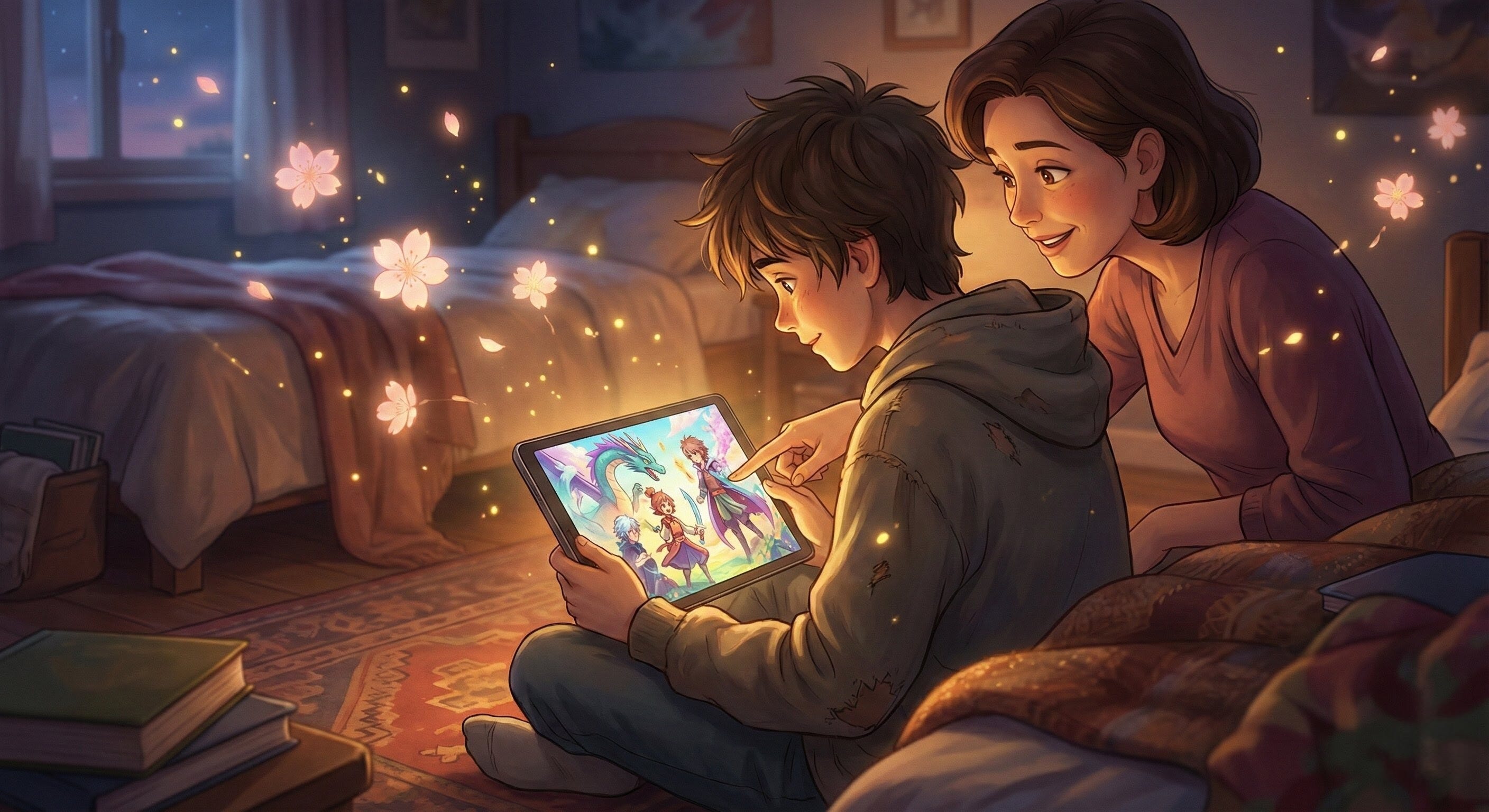
Building Resilience: What Parents Can Do
The goal isn’t to ban anime from your child’s life, as it can be a positive creative outlet for them, but we do want to build resilience against those hidden harms.
Understand the Vulnerability: Recognise that puberty increases emotional reactivity and stress sensitivity, making the validation found online feel urgent and overwhelming.
Stay Connected, Not Confrontational: As I always say, have open and honest communications with your child, staying curious about their online activity is important. Ask what they enjoy about something; don’t just ban it. Remember, if you judge them or get angry, then they are less likely to come to you with problems in the future and will likely try to hide things.
Watch for “Drift”: Be aware that communities like egg_irl or gaming threads can lead children away from family support and toward adults who encourage them to ignore their parents.
For neurodivergent children, the internet offers the connection they desperately seek. Your job is to ensure that while they seek their “tribe,” they don’t fall prey to those who would exploit their desire to belong.
Hopefully, this was useful. Should you have any questions, comments or feedback, as always, reach out. I am here to help.
As always, thank you for your support. Please share this across your social media, and if you do have any comments, questions, or concerns, then feel free to reach out to me here or on BlueSky, as I am always happy to spend some time helping to protect children online.
Remember that becoming a paid subscriber means supporting a charity that is very close to my heart and doing amazing things for people. Childline, I will donate all subscriptions collected every six months, as I don’t do any of this for financial gain.

It’s an interesting area, so many kids I’ve come across who have been drawn into transgenderism also like anime, and many of them are also neurodivergent. They are easy targets as they feel awkward in their teens so can be groomed in to believing they are in the wrong body.
Very helpful